
Safe mooring practices, controlled access, careful passing of moored vessels are essential to prevent injury, damage, operational disruption.
Summary
This Annual Notice to Mariners (ANTM) combines and supersedes Annual Standing Notices Nos. 04, 05, 09 and 22, addressing:
• Safety requirements for vessels alongside and for embarkation/disembarkation.
• Risks associated with mixed moorings.
• Interaction effects caused by passing vessels; and
• The prohibition of weighted heaving lines containing metal or other hard objects.
The Notice is issued to reinforce safe mooring practices, protect personnel and infrastructure, and manage navigational risks within the Port of Milford Haven, in accordance with the Port’s statutory powers, Harbour Byelaws, and the Ports and Marine Facilities Safety Code.
- Alongside Safety
- Mariners are reminded of the hazards associated with embarking and disembarking vessels from jetties or quays within the Haven.
- Vessels making fast must be fully secured, with engines stopped, before shore personnel embark or disembark.
- Mariners should always exercise caution and communicate directly with jetty staff to confirm that a safe means of access has been provided before any transfer takes place.
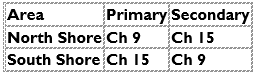
- The following VHF channels are allocated for berthing and un-berthing operations within the main body of the Haven, for use by ships, tugs, line boats and jetties:
- Mixed Moorings
- Mariners are reminded of the dangers associated with mixed moorings. Wherever practicable, mooring lines of the same size and material should be used for all leads.
- Where this is not possible, all lines used in the same service (e.g. head lines, stern lines, breast lines, spring lines) should be of the same size and material.
- The use of mixed moorings comprising full-length synthetic ropes in conjunction with wire for the same service should be avoided. Where wire and synthetic rope are used together, the wire will carry almost the entire load, leaving the synthetic rope effectively unloaded and increasing the risk of failure.
- Interaction with Moored Vessels
- Mariners navigating within the Haven are reminded of the need to exercise caution when passing moored vessels.
- Interaction effects may cause moored vessels to surge alongside, potentially affecting:
- Mooring integrity.
- Access ladders and gangways.
- Cargo operations, including loading arms.
- Bunkering or storing operations.
- Vessels alongside undertaking such activities are recommended to display the International Code Signal “RY”.
- Interaction effects may be significantly reduced by passing at reduced speed and giving as wide a berth as practicable.
- Vessels alongside should ensure that moorings are regularly tended and not allowed to become slack.
- Weighted Heaving Lines
- Mariners are advised that the practice of weighting heaving lines with metal, chain, bolts, or similar objects presents a serious risk of injury and is not acceptable within Milford Haven.
- A monkey’s fist, constructed solely of suitable rope and not painted, may be used to weight a heaving line. As an alternative, a fast-draining shingle bag may be used.
- Mariners should refer to the Code of Safe Working Practices for Merchant Seafarers, Consolidated Edition (Amendment 2, December 2017), Section 26.3.5, for further guidance.
- This requirement is issued under Milford Haven Harbour Byelaws 1984, Byelaw No. 57. Any occurrence of prohibited weighted heaving lines may result in enforcement action or criminal prosecution.
- Compliance and Enforcement
- MHPA reserves the right to take appropriate action where unsafe mooring practices or breaches of this Notice are observed.
- Failure to comply may result in delay to operations, restriction of activity, or enforcement action under the Harbour Authority’s statutory powers.
- This Notice will self-cancel at 23:59hrs on 31st December 2026.